
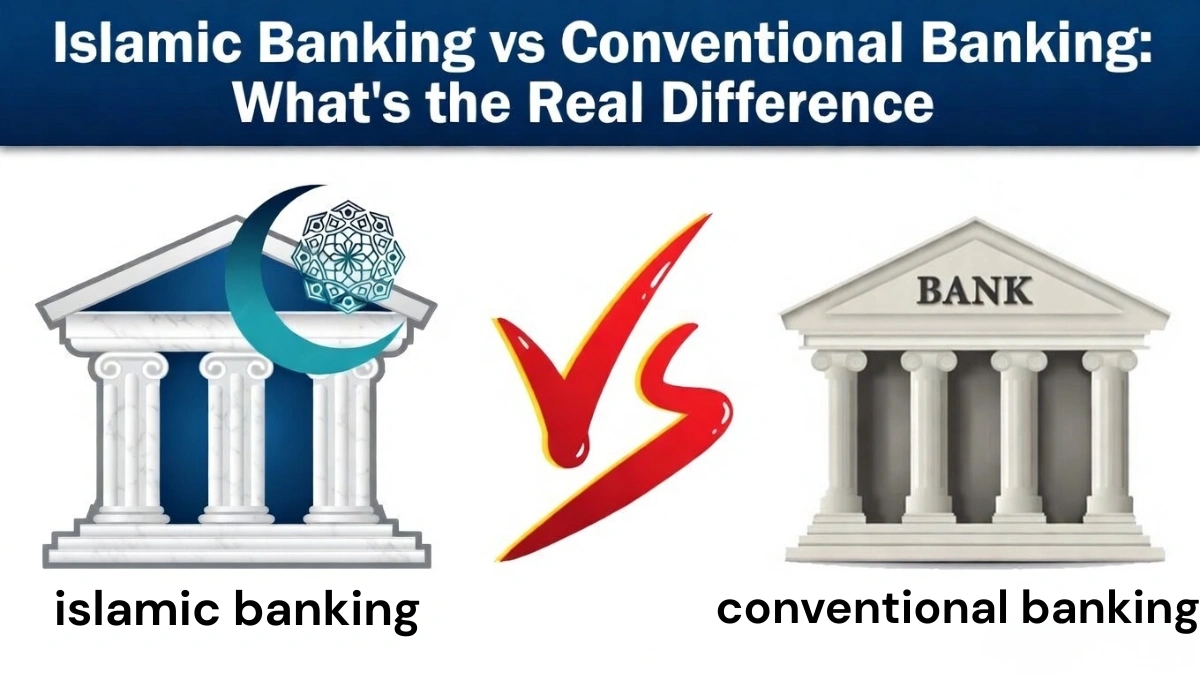
Banking systems around the world generally fall into two main categories: Islamic banking and conventional banking. While both aim to provide financial services such as loans, savings, and investments, they operate on fundamentally different principles. Understanding these differences is essential for choosing the right banking system based on your financial goals and personal values.
Islamic banking is based on Sharia principles, which emphasize ethical, transparent, and interest-free financial practices. In contrast, conventional banking relies heavily on interest-based transactions and profit maximization. Both systems have their advantages and limitations, making it important to compare them carefully.
Core Principle Differences
The most significant difference between Islamic and conventional banking lies in how they generate profit. Islamic banking strictly prohibits interest (riba) and instead focuses on profit-sharing and asset-backed financing. Banks earn through trade, leasing, or partnerships. Conventional banks, on the other hand, generate income primarily through interest on loans and credit facilities.
Profit and Risk Structure
In Islamic banking, profit and risk are shared between the bank and the customer. This creates a more balanced financial relationship where both parties have a stake in the outcome.
Conventional banking places most of the risk on the borrower. The bank earns interest regardless of whether the borrower profits or faces financial difficulties. This fundamental difference impacts how financial products are structured and managed.
Nature of Transactions
Islamic banking requires all transactions to be linked to real assets or services. This ensures that money is not treated as a commodity but as a medium of exchange. Conventional banking allows money to be traded as a commodity, enabling practices such as interest-based lending and speculative investments. Islamic banks avoid excessive uncertainty (gharar) and speculative activities.
Ethical and Social Considerations
Ethics play a central role in Islamic banking. Investments must comply with Sharia guidelines, meaning funds cannot be used in industries such as alcohol, gambling, or tobacco.
Conventional banks do not typically impose such restrictions and may invest in a broader range of industries, depending on regulations and policies.
Key Differences Table
| Feature | Islamic Banking | Conventional Banking |
|---|---|---|
| Interest (Riba) | Not allowed | Core component |
| Profit Model | Profit-sharing, trade-based | Interest-based |
| Risk | Shared between bank and customer | Mostly on borrower |
| Transactions | Asset-backed | Money-based |
| Ethics | Strict Sharia guidelines | Fewer restrictions |
| Speculation | Not allowed | Allowed |
Products and Services
Both systems offer similar types of financial products but with different structures. Islamic banks provide products such as Murabaha financing, Mudarabah investments, and Ijara leasing. Banks like Al Rajhi Bank and Alinma Bank are well-known for offering these services.
Conventional banks offer loans, savings accounts, credit cards, and investment products based on interest and fixed returns.
Transparency and Contracts
Islamic banking emphasizes clear and transparent contracts. All terms must be defined upfront to avoid uncertainty and disputes. Conventional banking may involve complex terms and variable interest rates, which can sometimes make it harder for customers to fully understand the total cost of borrowing.
Advantages of Each System
Islamic Banking
- Ethical and Sharia-compliant
- Promotes fairness and risk-sharing
- Transparent and asset-backed transactions
Conventional Banking
- Widely available globally
- Simpler and more flexible product structures
- Often faster approval processes
Which One Should You Choose
Choosing between Islamic and conventional banking depends on your personal preferences and financial priorities. If you value ethical finance and want to avoid interest-based transactions, Islamic banking is the better option. If you prefer flexibility and a wider range of global financial products, conventional banking may suit your needs.
Final Thoughts
Islamic and conventional banking systems serve the same purpose but follow very different approaches. Islamic banking focuses on ethical, interest-free, and asset-backed transactions, while conventional banking is built on interest and profit maximization.
By understanding the key differences, you can make an informed decision that aligns with your financial goals and values.