
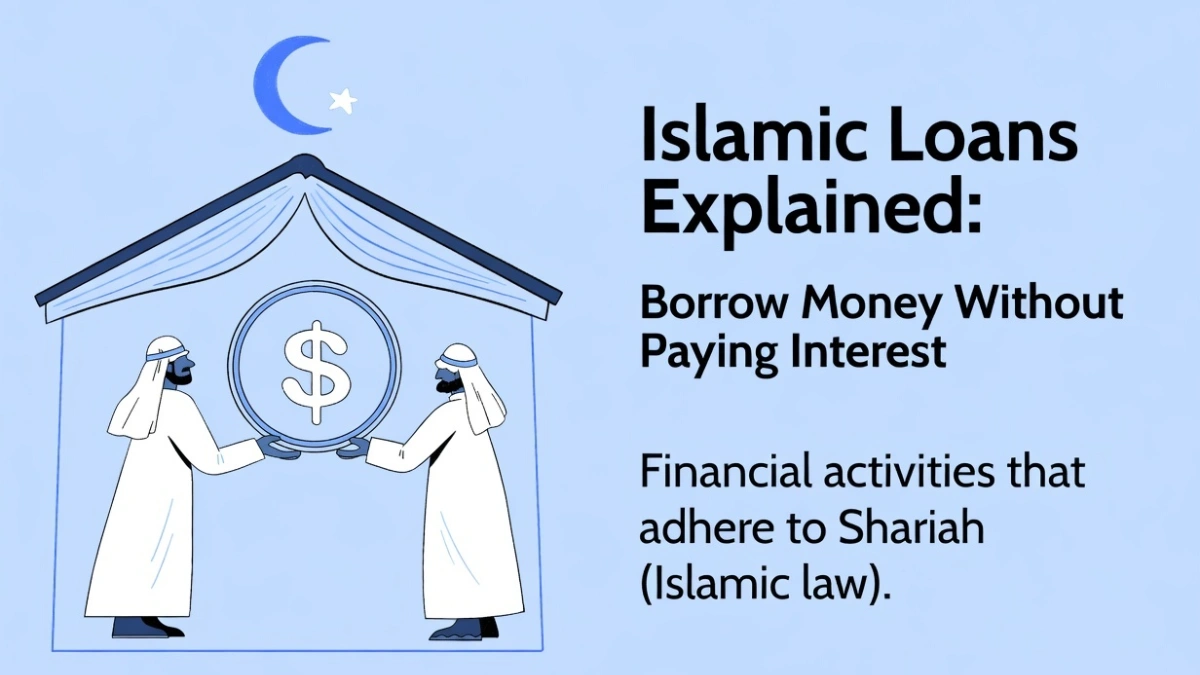
Islamic loans are designed to provide financing without involving interest (riba), which is prohibited under Sharia law. Instead of lending money and charging interest, Islamic banks use alternative structures that are based on trade, leasing, or partnerships. These models ensure that financial transactions remain ethical, transparent, and compliant with Islamic principles.
In Saudi Arabia and other Islamic finance markets, these financing methods are widely used for personal loans, home financing, and business funding. While they may seem similar to conventional loans on the surface, the underlying structure is fundamentally different, focusing on asset-based transactions and profit-sharing rather than interest.
Core Principle: No Interest (Riba-Free Financing)
The key principle behind Islamic loans is the complete avoidance of interest. Banks do not earn money by charging interest on borrowed funds. Instead, they generate profit through legitimate trade or service-based arrangements.
This ensures fairness in financial dealings and prevents exploitation, as both the bank and the customer are involved in a transparent transaction.
Common Types of Islamic Loan Structures
Islamic banks use several well-established models to provide financing:
Murabaha (Cost-Plus Financing)
In this structure, the bank purchases an asset (such as a car or property) and sells it to the customer at a higher, pre-agreed price.
- The profit margin is fixed and disclosed upfront
- Payments are made in installments
- No interest is charged
This is one of the most commonly used methods for personal and consumer financing.
Tawarruq (Cash Financing)
Tawarruq is used when customers need cash rather than a physical asset.
- The bank buys a commodity and sells it to the customer
- The customer then sells the commodity in the market for cash
- The repayment is made in installments with a fixed profit
This method provides liquidity while remaining Sharia-compliant.
Ijara (Leasing Model)
Ijara works like a lease agreement.
- The bank purchases an asset and leases it to the customer
- The customer pays rent over a fixed period
- Ownership may transfer at the end of the contract
It is commonly used for home and vehicle financing.
Musharakah (Partnership Financing)
In Musharakah, the bank and customer jointly invest in an asset or project.
- Both parties share profits and losses
- Ownership is divided based on contribution
- The customer may gradually buy out the bank’s share
This model is often used in real estate financing.
Key Features of Islamic Loans
Islamic loans come with several important characteristics that differentiate them from conventional loans:
- No interest charges (riba-free)
- Fixed and transparent profit rates
- Asset-backed or trade-based transactions
- Shared risk in some financing models
- Ethical and Sharia-compliant structure
These features make Islamic loans a preferred option for individuals seeking ethical financial solutions.
Islamic Loans vs Conventional Loans
| Feature | Islamic Loans | Conventional Loans |
|---|---|---|
| Interest | Not allowed | Charged on loans |
| Structure | Asset or trade-based | Money lending |
| Profit | Fixed or shared | Interest-based |
| Risk | Shared or structured | Mostly on borrower |
| Transparency | High | Varies |
Benefits of Islamic Loans
- Compliant with Islamic principles
- Transparent and clearly defined costs
- Encourages responsible borrowing
- Avoids compounding interest
- Suitable for ethical financial planning
Things to Consider
While Islamic loans do not charge interest, borrowers should still evaluate:
- Total repayment amount compared to conventional loans
- Processing fees and administrative charges
- Early settlement conditions
- Eligibility requirements
Understanding these factors helps in making informed decisions.
Final Thoughts
Islamic loans offer a practical and ethical alternative to conventional financing by eliminating interest and focusing on real economic activity. Through models like Murabaha, Tawarruq, Ijara, and Musharakah, they provide flexible solutions for individuals and businesses while staying aligned with Sharia principles.
For anyone looking to finance purchases or meet financial needs without engaging in interest-based transactions, Islamic loans present a reliable and transparent option.